Introduction
There is often a debate about the optimal way to use the central heating. There are arguments to be made that you should only turn it on when you need it, and there are arguments to be made that say you should leave it on for a long time to ensure the house temperature is up to that, and therefore not use it as much. Read on to see some tips and tricks about how to effectively use your central heating to remain comfortable economically and physically during the winter.
When to turn the heating on?
Well, it is not as straightforward an answer as you may hope. As mentioned before, it is argued. This goes for the time of the day and the time of the year.
Answer: Do it when you feel uncomfortable with the temperature.
There are some exceptions, mainly surrounding health and age. If there are people who are older in age, then you may want to turn the heating on earlier and up higher. This is the same for people who have health issues and people who might have particular illnesses, or if they are very young.
Once the air temperature falls below 15ºC, the human body will start to feel some cold discomfort. According to the Met Office, the air temperature outside starts to consistently fall below 15ºC during September, and the average maximum temperature is below 15ºC in October. Therefore, naturally, the UK population starts to turn their heating on between the middle of September and throughout October. Based on this, the UK population will then start to turn off their heating in April/May.
When is the best time in the day to turn the heating on?
Again, this is another hot debate between residents, but it is mainly based on energy usage and cost. According to the Energy Saving Trust, the best time to turn the heating on is whenever you need it. A good routine is for the heating to turn on around 30 minutes before you wake up and to turn off around 30 minutes before you go to bed. However, this is just at peak times. It is likely that you will be heading outside for at least most of the day; if so, they recommend that you turn the heating off completely when you do so. Properties with boilers will expel more energy if left on all day and generally will cost more.
What temperature is best for comfort?
This can depend on the type of person that you are, for example, if you are young, fit and healthy, then you can manage a slightly cooler temperature compared to an older person who may have some health issues that they tackle daily. However, according to the BBC and The Energy Saving Trust, rooms within the temperature range of 18-21ºC are deemed the most suitable for comfort.
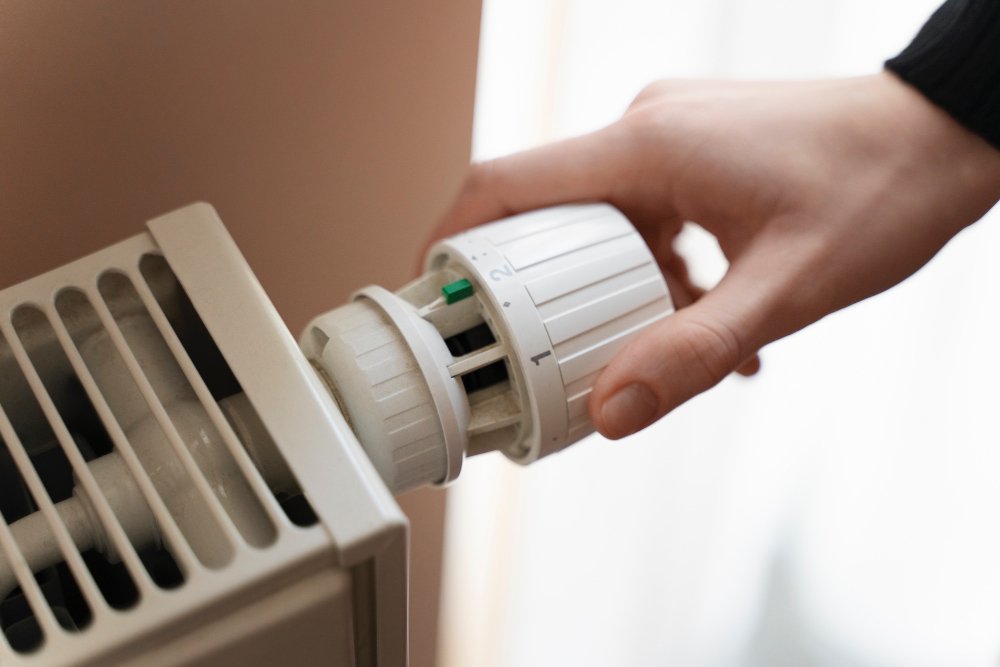
Setting the thermostat to this range is perfect as it ensures that the heating only comes on when the temperature drops below 18ºC but does not overheat the room, and therefore, overheat you.
Do I need to keep my house warm all the time?
There are benefits to heating the home; it helps warm the air and therefore helps to reduce damp and mould. Keeping the house warmer does allow for you to feel more comfortable. However, you can find ways to keep yourself warm without using the central heating.
Firstly, there is the option of using space heaters. However, using space heaters does offer their individual risks such as burning and fires. But there are techniques that you can do to keep yourself warm by wearing extra layers of clothing and using hot water bottles. These things are free to use and can help you feel and stay warm when the heating is off.