
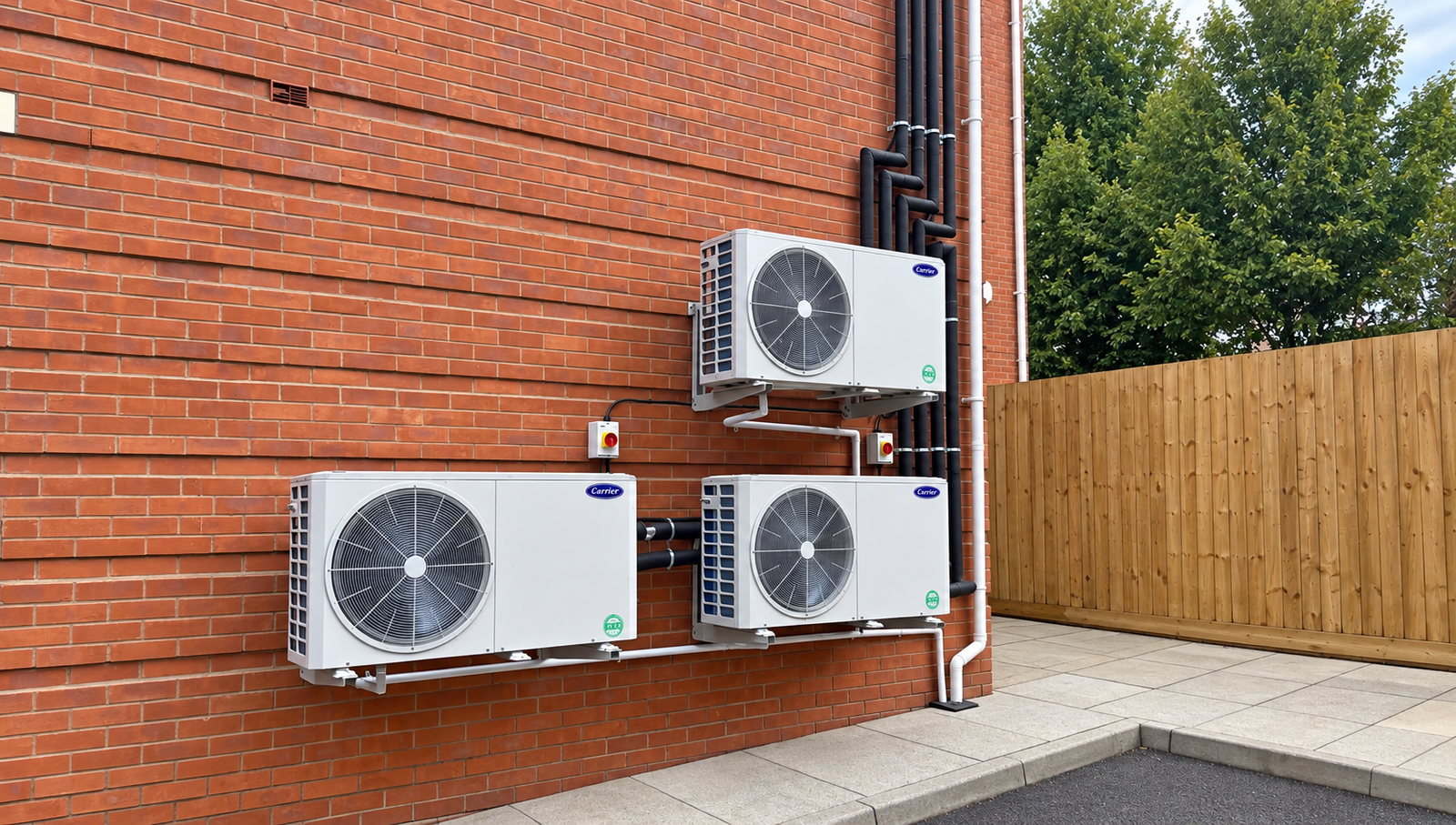
As the UK continues to focus on improving energy efficiency and reducing carbon emissions, more landlords and property owners are looking at renewable heating solutions for their properties. One option that is becoming increasingly popular is the air source heat pump.
At Touchstone Developments and Investments, we always try where viable to do so, install air source heat pumps to our properties as part of our work to improve properties and achieve the highest EPC rating. This helps to create homes that are warmer, more energy efficient and more affordable to run, while also supporting our wider vision of contributing towards a net-zero UK.
What is an air source heat pump?
An air source heat pump is a renewable heating system that takes heat from the air outside and transfers it into a home. It can be used to provide heating through radiators or underfloor heating, as well as heating the hot water used for taps, showers and baths. The system works by taking heat from the outside air and transferring it to a refrigerant. This refrigerant then passes through a compressor, which increases its temperature before the heat is transferred into the home’s heating system. Unlike a traditional boiler, which burns fossil fuels to create heat, a heat pump uses electricity to move heat from one place to another. This makes it a lower-carbon alternative to traditional heating systems. Air source heat pumps are currently the most common type of domestic heat pump and can be suitable for a wide range of properties.
How much does an air source heat pump cost?
The cost of installing an air source heat pump can vary depending on the property and the system required. On average, an installation can cost around £10,000–£12,000. However, the final cost can depend on factors such as the size of the heat pump, the size and type of property, whether it is a new build or an existing home, and whether the existing radiators need to be upgraded. There are also government grants available that can help reduce the upfront cost. The Boiler Upgrade Scheme is available in England and Wales and can provide eligible homeowners and private landlords with a grant of up to £7,500 towards an air source or ground source heat pump. From 21 July 2026 to 31 March 2027, eligible off-grid properties can also receive a grant of up to £9,000 towards an air source or ground source heat pump. For landlords considering upgrading their properties, these grants could make renewable heating a more achievable investment.
What are the benefits for landlords?
There are several reasons why landlords may want to consider air source heat pumps when upgrading their properties these are:
Improved energy efficiency:
One of the biggest benefits is improved energy efficiency. A well-designed heat pump system can help reduce the amount of energy needed to heat a property, which can help lower household energy bills. At Touchstone Developments and Investments, installing air source heat pumps has formed part of our approach to improving the energy efficiency of properties and achieving the highest possible EPC Rating of a B or above.
Lower carbon emissions:
Heat pumps do not burn fossil fuels in the same way that traditional gas boilers do. Instead, they use electricity to transfer heat from the outside air into the property. This can help reduce carbon emissions and improve the property’s overall carbon footprint, supporting the move towards more sustainable homes and contributing to the UK’s wider net-zero ambitions.
Heating and hot water from one system:
An air source heat pump can provide both heating and hot water. Depending on the system, this can work alongside radiators, underfloor heating and a hot water cylinder. Heat pumps are also designed to continue working in cold temperatures and can provide heating even when outdoor temperatures fall as low as around -15°C.
What space does an air source heat pump need?
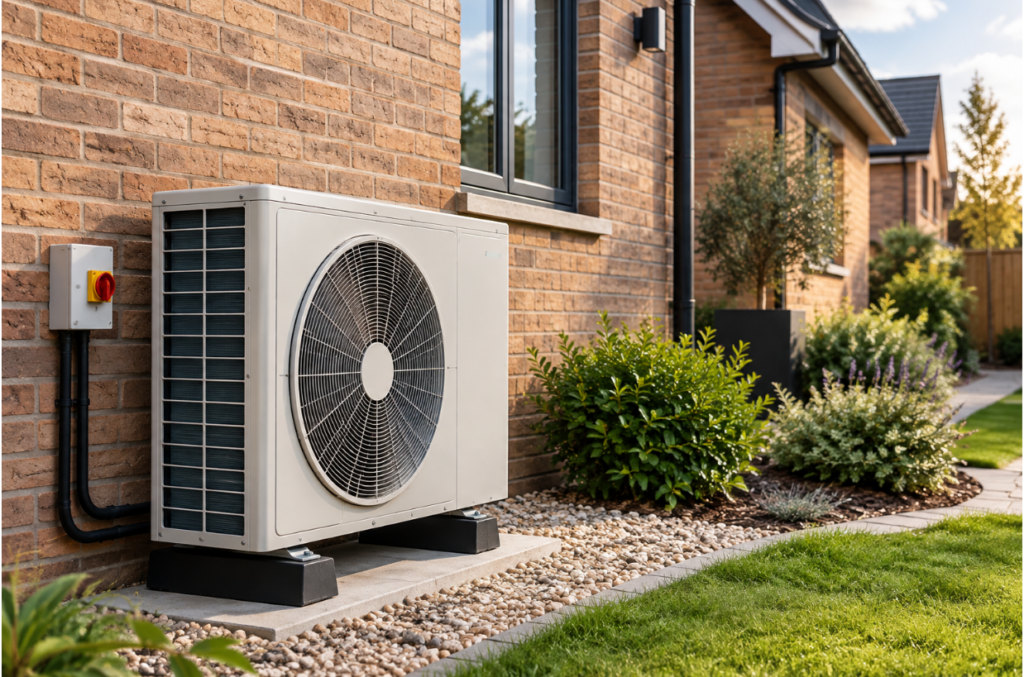
Space is something landlords should consider before installing an air source heat pump. The outdoor unit needs to be positioned outside the property, either on the ground or mounted to a wall. It also needs sufficient space around it to allow air to flow through the system properly. For landlords who are concerned about the appearance of the unit, there are ways to conceal or screen the heat pump using suitable outdoor storage or screening. However, it is important that any covering does not restrict the airflow around the unit. The system may also require space inside the property for a hot water cylinder. A typical cylinder can require around 800 × 800mm of space, which can be an important consideration, particularly in smaller homes. Alternative options are available where space is limited. For example, some hybrid systems can use a heat pump for heating and a boiler for hot water, while heat batteries can provide another option that takes up less space than a traditional hot water cylinder.
Monobloc vs split systems
There are two main types of air source heat pump systems: monobloc and split systems. A monobloc system has all its main components within one outdoor unit. Pipes then carry water between the outdoor unit and the home’s heating system and hot water cylinder. A split system separates the heat pump components between an outdoor and indoor unit. The most suitable system will depend on the individual property, available space and the heating requirements of the home.
Air source vs ground source heat pumps
Air source heat pumps are not the only type of renewable heat pump available. Another option is a ground source heat pump. The main difference is where the system gets its heat from. An air source heat pump takes heat from the air, while a ground source heat pump takes heat from the ground through underground pipework. Ground source systems can be more efficient because ground temperatures remain relatively stable throughout the year. This can mean lower running costs and lower carbon emissions in some circumstances, particularly during colder periods. However, ground source heat pumps are generally more expensive to install and require considerably more land because of the underground pipework. For landlords, the decision between an air source and ground source system will depend on factors such as the property’s available space, budget, heating requirements and the level of efficiency required.
Planning permission and regulations
Planning requirements are another consideration when installing a heat pump. In England, as of 29 May 2025, most air source heat pump installations no longer require planning permission from the local authority, provided they meet the relevant permitted development requirements. Class G permitted development rights can allow air source heat pumps to be installed, altered or replaced on residential properties, including houses, bungalows and blocks of flats, subject to the applicable conditions. The rules in Wales have also changed. From 1 June 2026, new permitted development rules increased the number of properties that can install air source heat pumps and made a few changes to the requirements. These include increasing the size limit for heat pumps on dwelling houses from 1m³ to 1.5m³ and allowing heat pumps to be installed within 3 metres of a property boundary, subject to the relevant requirements. This makes it important for landlords to check the current rules that apply to their property and location before beginning an installation.
How much maintenance does an air source heat pump need?
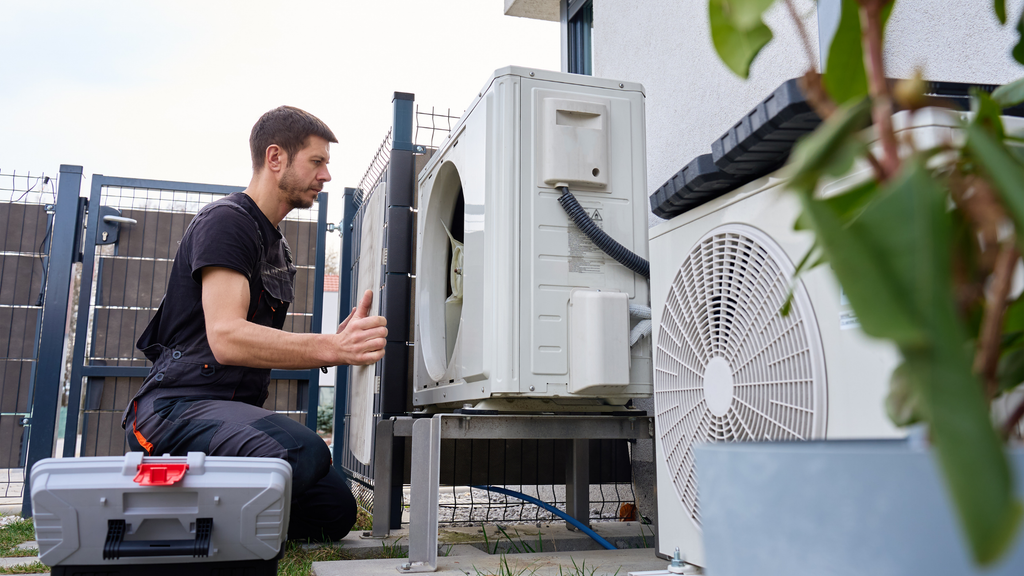
Air source heat pumps generally require less maintenance than traditional boilers. However, regular servicing is still important to keep the system operating efficiently and to help maintain the manufacturer’s warranty requirements. An annual service is recommended to check that the system is working correctly and identify any potential issues early. With proper care and maintenance, an air source heat pump can typically last 20 years or more, making it a long-term investment for a property.
Could solar panels make an air source heat pump even more efficient?
Another option for landlords looking to improve the energy efficiency of a property is combining an air source heat pump with solar panels. Because an air source heat pump runs using electricity, generating some of that electricity through solar panels can help reduce reliance on electricity from the grid and potentially lower running costs. Combining renewable technologies can therefore be another way of improving a property’s overall energy performance.
Looking towards more energy-efficient homes
Air source heat pumps are becoming an increasingly important part of the UK’s move towards more energy-efficient and lower-carbon homes. For landlords, they can offer an opportunity to improve the energy performance of properties, reduce carbon emissions and potentially lower running costs for tenants. However, there is no one-size-fits-all solution. The right heating system will depend on the property, its existing heating system, available space and the landlord’s budget. At Touchstone Developments and Investments, we see energy efficiency as an important part of improving the quality and long-term performance of properties. By investing in measures such as air source heat pumps and working towards higher EPC ratings, landlords like Touchstone and Chrysalis can help create homes that are more comfortable, efficient and prepared for the future.